


Certificación ISO 56001: innovación con calidad global sostenida en el tiempo
A un año de haber alcanzado un hito para Uruguay y para la región, el Parque Científico y Tecnológico de Pando recibió nuevamente la auditoría correspondiente por parte de AENOR para la renovación de su certificación ISO 56001 en sistemas de gestión de la innovación, y su certificación UNE 166006 de Vigilancia e Inteligencia Competitiva.
En 2025, el Parque se convirtió en el primer parque científico del mundo y la primera organización de Latinoamérica en obtener esta certificación internacional. La renovación alcanzada este año no solo confirma la vigencia de aquel reconocimiento, sino que demuestra la continuidad, solidez y mejora de un sistema de trabajo orientado a gestionar la innovación con estándares globales.
La ISO 56001 es la primera norma internacional certificable dirigida específicamente a los sistemas de gestión de la innovación. Su objetivo es establecer requisitos y orientaciones para crear, implementar, mantener y mejorar capacidades organizacionales que permitan innovar de forma sistemática, sostenida y alineada con la estrategia institucional.
Para el Parque Científico, esta certificación tiene un valor especialmente significativo. La innovación no es entendida únicamente como el resultado final de un proyecto, sino como un proceso que requiere método, gobernanza, capacidades técnicas, evaluación y aprendizaje.
El proceso de auditoría desarrollado por AENOR permitió validar nuevamente la conformidad del sistema de gestión de la innovación del Parque con los requisitos de la norma. Este reconocimiento refuerza la confianza de empresas, instituciones, investigadores, socios estratégicos y organismos públicos en la capacidad del Parque para acompañar proyectos de I+D+i con criterios de calidad, trazabilidad y mejora continua.
Este nuevo logro se inscribe en una trayectoria institucional orientada a profesionalizar la gestión de la innovación. Desde sus antecedentes, incorporando buenas prácticas contenidas en las normas UNE de gestión de I+D+i, vigilancia e inteligencia, hasta la certificación ISO 56001, el Parque ha consolidado una forma de trabajo que busca reducir incertidumbres, ordenar procesos, identificar oportunidades y transformar conocimiento científico-tecnológico en soluciones concretas para el sector productivo y la sociedad.
La certificación también fortalece el posicionamiento del Parque como una capacidad país. En un contexto en el que Uruguay necesita acelerar sus procesos de innovación aplicada, contar con instituciones capaces de articular conocimiento, empresas, capacidades públicas, academia y cooperación internacional, trabajar bajo estándares internacionales resulta clave para generar mayor impacto.
Más que una distinción formal, esta certificación expresa una decisión estratégica: sostener una cultura institucional orientada a la innovación, la excelencia y la creación de valor. Para el Parque, implica seguir trabajando con una mirada de largo plazo, fortaleciendo sus procesos internos y ampliando su contribución al ecosistema nacional de ciencia, tecnología e innovación.
Con este nuevo hito, el Parque Científico y Tecnológico de Pando reafirma su compromiso con un Uruguay que innova con calidad y método con proyección internacional.
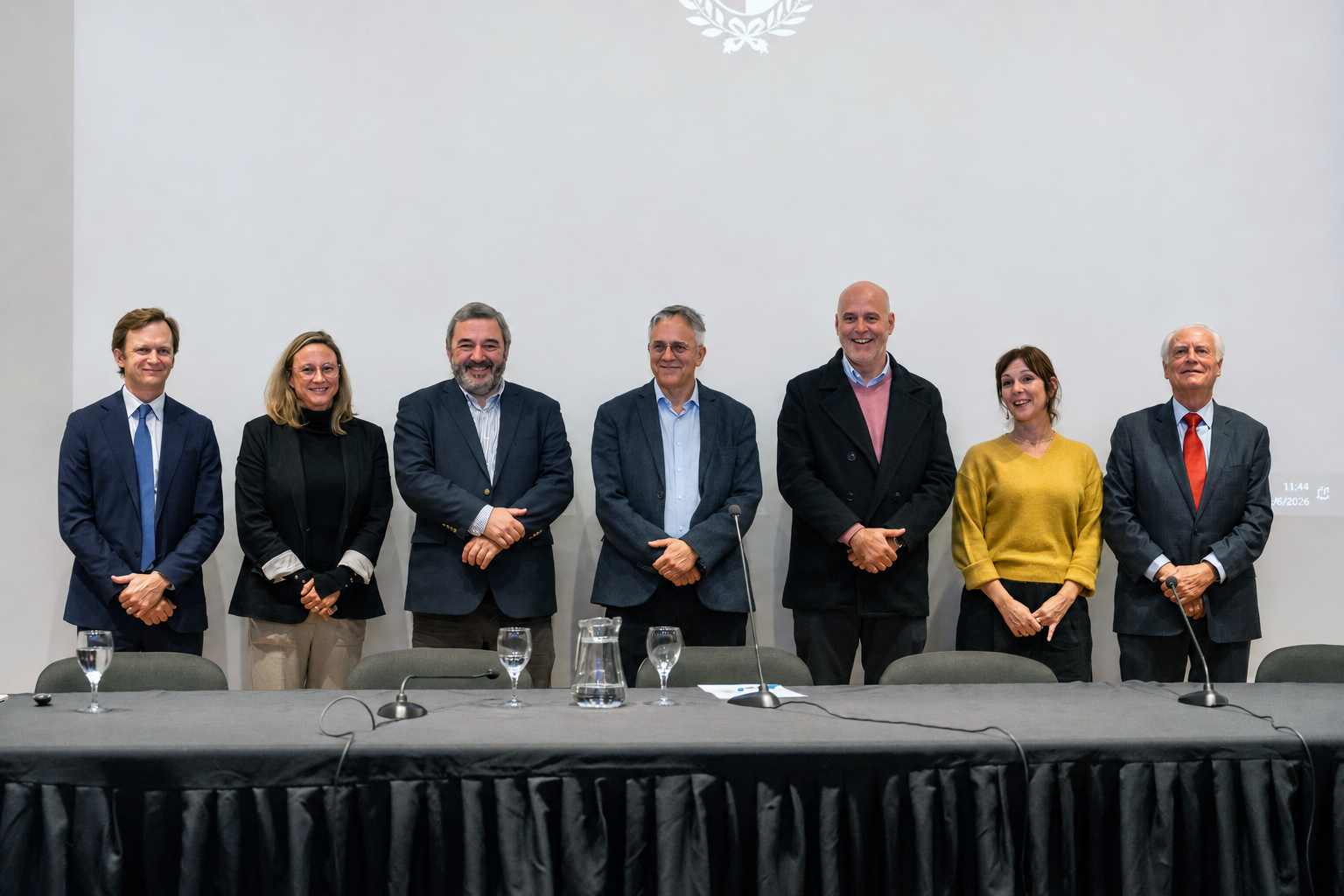
Instituciones públicas y privadas firmaron acuerdo para crear el Distrito de Innovación
Autoridades nacionales, departamentales y representantes del sector privado firmaron el acuerdo para la creación del futuro Distrito de Innovación entre las rutas 8, 101 y 102, una iniciativa destinada a impulsar el desarrollo territorial, económico y social del área metropolitana.
El evento, que se realizó en Torre Ejecutiva, contó con la participación de los intendentes de Montevideo y Canelones, Mario Bergara y Francisco Legnani, respectivamente; el director de la Oficina de Planeamiento y Presupuesto (OPP), Rodrigo Arim; la directora nacional de Ordenamiento Territorial, Paola Florio; y por parte de Zonamerica, el Parque Científico y Tecnológico de Pando y el Parque de las Ciencias, Gabriela Schroeder.
La directora nacional de Ordenamiento Territorial, Paola Florio, presentó los principales lineamientos del futuro distrito y señaló que la iniciativa retoma propuestas impulsadas desde 2010, lo que evidencia el interés sostenido que ha generado a lo largo de los años.
“Buscamos hacer visible lo invisible. Muchas veces estos procesos y planes no se conocen hasta determinadas etapas. Por eso hoy queremos mostrar que los territorios no funcionan de manera aislada, sino que pueden gestionarse desde una lógica de trabajo transversal, en la que distintos actores colaboren para alcanzar objetivos comunes y promover la innovación y el desarrollo territorial”, expresó.
Por su parte, el intendente de Canelones, Francisco Legnani, destacó el potencial de la zona y las oportunidades que ofrece el proyecto. “Todos conocemos la enorme capacidad de desarrollo que tiene este territorio, así como las posibilidades de crecimiento que aún están por venir”, señaló. Además, afirmó que se trata de una iniciativa clave no solo para impulsar la innovación, sino también para generar empleo de calidad, formar mano de obra calificada y aprovechar todo el potencial que Uruguay tiene para ofrecer.
En tanto, el intendente de Montevideo, Mario Bergara, afirmó que el Distrito Metropolitano de Innovación constituye una apuesta estratégica de largo plazo. “Estamos pensando en generar oportunidades para el desarrollo de nuestra gente y en fortalecer la inserción de Uruguay en el mundo”, señaló. Además, sostuvo que mantener la competitividad del país solo será posible mediante la articulación entre los sectores público y privado, con el objetivo de impulsar el conocimiento, la innovación y el bienestar de las futuras generaciones.
El director de la Oficina de Planeamiento y Presupuesto (OPP), Rodrigo Arim, señaló que este tipo de procesos responde a la necesidad de desarrollar modelos de gobernanza que superen las fronteras departamentales y permitan abordar los desafíos desde una perspectiva integral. “Uruguay todavía presenta niveles relativamente bajos de inversión en investigación y desarrollo en comparación con otros países”, advirtió. Además, valoró especialmente iniciativas como esta, orientadas a fomentar la tecnología y consideró fundamental que el Estado esté presente para generar los incentivos adecuados que permitan su desarrollo de la mejor manera posible.
Gabriela Schroeder, presidenta del Parque Científico y Tecnológico de Pando, celebró la perseverancia del acuerdo y afirmó que “este convenio busca generar un flujo entre las necesidades de los sectores productivos e industriales y los gestores de innovación, para que, a través de la ciencia y la tecnología, se encuentren las soluciones que esos sectores requieren. Es una iniciativa que no solo apunta a impulsar la innovación y el desarrollo científico, sino también a generar impacto en todo el territorio, por lo que ahora el desafío es trabajar para que produzca resultados concretos”.
Por su parte, Martín Dovat, Gerente General de Zonamerica, sostuvo que “se trata de una apuesta estratégica para demostrar todo el potencial de desarrollo e innovación que puede surgir del trabajo conjunto entre el sector privado, el sector público y la academia. Una vez más, queda demostrado que los proyectos de mayor impacto son posibles cuando existe colaboración y compromiso entre todos los actores involucrados”.
El gerente general del Parque de las Ciencias, Enrique Buero, destacó la importancia de la integración entre los distintos actores de la zona. “Vincularnos con la academia, con otros parques tecnológicos y con las intendencias ha sido clave para nuestro trabajo que es atraer inversiones. Este proyecto refuerza esa visión y nos genera grandes expectativas sobre los resultados que puede alcanzar”, apuntó.
El proyecto busca incluir áreas logísticas, industriales y residenciales para generar no solo un impacto tecnológico, industrial y financiero, sino también social, tomando como referencia ejemplos de otras partes del mundo, como Medellín y Barcelona.
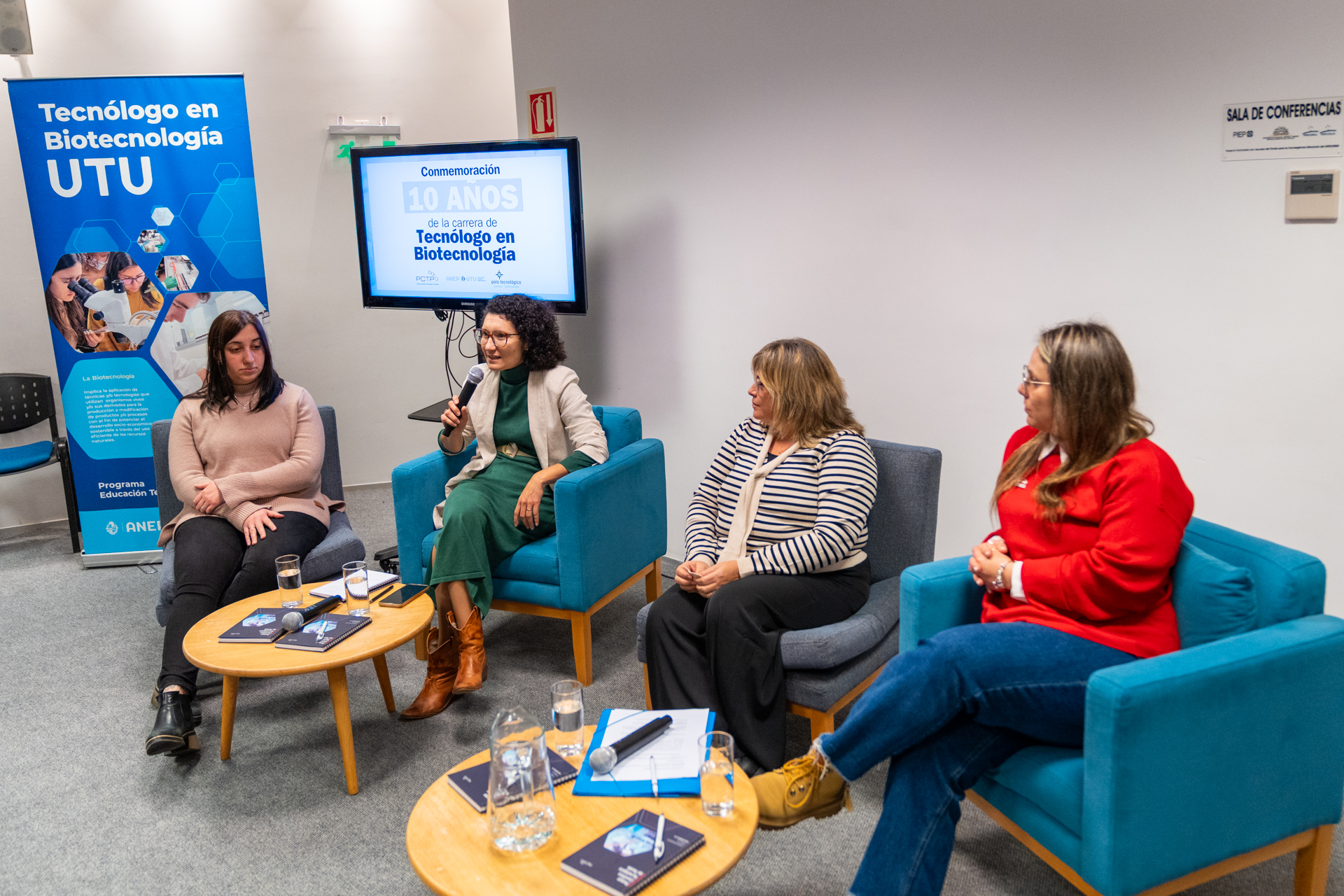
El Tecnólogo en Biotecnología celebró 10 años de su creación en el Parque Científico y Tecnológico de Pando
En el marco de la Semana de la Ciencia y la Tecnología, el Parque Científico y Tecnológico de Pando fue sede de la conmemoración por los diez años de la creación del Tecnólogo en Biotecnología, una propuesta formativa que nació de la articulación entre instituciones educativas, científicas, tecnológicas y productivas. La actividad reunió a autoridades, docentes, estudiantes, egresados, representantes institucionales y del sector productivo para reconocer el recorrido de una carrera que ha contribuido a formar capacidades técnicas vinculadas a un área estratégica para el país.
Durante la apertura, las autoridades destacaron que el Tecnólogo en Biotecnología surgió como una respuesta pública y territorial a necesidades concretas del sector biotecnológico. Las intervenciones pusieron énfasis en el valor de la cooperación entre UTU, el Parque Científico y Tecnológico de Pando, el Instituto Polo Tecnológico de Pando de la Facultad de Química de la Udelar, empresas y otros actores del ecosistema. También se subrayó que la educación técnica y tecnológica cumple un rol central en la generación de oportunidades, el desarrollo local y la transformación productiva.
La mesa de diálogo permitió reconstruir el origen y la evolución de la carrera. Laura Vera, gerente de Desarrollo de Proyectos y Negocios del PCTP, repasó el contexto territorial e institucional que dio lugar a la propuesta, en un momento en que Canelones y el corredor de innovación comenzaban a consolidar nuevas capacidades productivas. Cecilia Negro, coordinadora nacional de Biotecnología de DGETP-UTU, abordó los desafíos de la puesta en marcha, la consolidación docente, las pasantías, la actualización curricular y la expansión de la carrera hacia otros territorios del país.
La jornada también incorporó la mirada de los egresados y del sector productivo. La tecnóloga Alejandra Merlo compartió su experiencia de formación y su posterior inserción laboral en la industria vinculada a productos veterinarios y vacunas. Por su parte, Cecilia Hermann, representante de Lage y Compañía, valoró el aporte de este perfil técnico a empresas biotecnológicas, especialmente por su capacidad de adaptación a procesos analíticos, productivos y de laboratorio. En el intercambio con el público se destacaron además las oportunidades que abre la biotecnología en áreas como la industria farmacéutica humana y animal, la forestación, los alimentos y el ambiente.
El cierre incluyó palabras de Gabriela Schroeder, presidenta del PCTP, quien remarcó la importancia de sostener ecosistemas de innovación capaces de articular conocimiento, producción y políticas públicas. En ese marco se anunció el apoyo del Centro Tecnológico de Bioeconomía Circular a un programa de becas para estudiantes de la carrera, que llevará el nombre de Isabel Vives, en reconocimiento a su trayectoria, su compromiso con la educación técnica, la innovación y la generación de oportunidades y su participación y aporte a la creación de esta carrera. La conmemoración dejó planteado que los diez años del Tecnólogo en Biotecnología constituyen no solo un hito institucional, sino también una base para seguir fortaleciendo la formación, la inserción laboral y el desarrollo biotecnológico en la región y en todo el Uruguay.
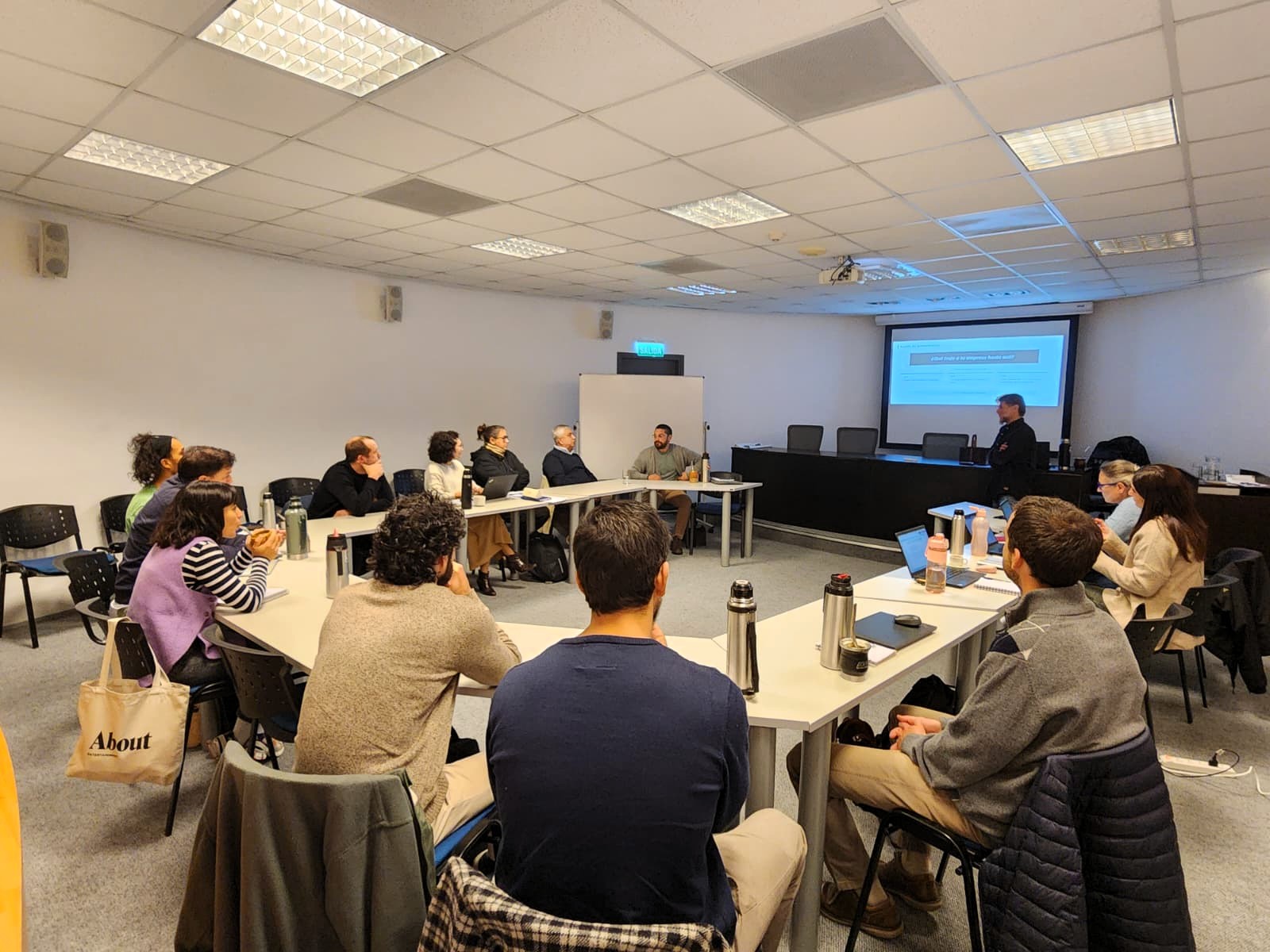
Impulso Bio realizó un taller sobre asociatividad empresarial para fortalecer el sector de bioinsumos en Uruguay
El martes 12 de mayo se desarrolló en el Parque Científico el "Taller de Asociatividad Empresarial", una nueva instancia de trabajo del proyecto Impulso Bio, orientada a fortalecer la articulación entre empresas uruguayas productoras de bioinsumos y avanzar en la construcción de una agenda común para el sector.
La actividad fue facilitada por el consultor Adrián Bendelman, especialista en mejora competitiva, internacionalización, asociatividad y sostenibilidad. Durante el taller participaron empresas del sector y representantes de las instituciones que participan del proyecto, con el objetivo de reflexionar sobre los desafíos compartidos, las oportunidades de cooperación y los posibles caminos para consolidar redes empresariales más sólidas en torno a los bioinsumos en Uruguay.
A lo largo de la jornada se abordaron conceptos clave vinculados a la asociatividad empresarial, entendida como una estrategia de cooperación entre empresas independientes que, sin perder su autonomía, coordinan esfuerzos, recursos y responsabilidades para alcanzar objetivos comunes. En ese marco, se trabajó sobre aspectos como gobernanza, confianza, liderazgo, reglas de juego, generación de proyectos colectivos y sostenibilidad de los procesos colaborativos.
El taller también incluyó el análisis de experiencias de referencia de Argentina y Brasil, entre ellas modelos de redes empresariales, cámaras sectoriales y asociaciones gremiales vinculadas al sector de bioinsumos. Estos casos permitieron identificar aprendizajes relevantes para Uruguay, especialmente en relación con la construcción de voz sectorial, la incidencia en políticas públicas, la articulación con instituciones científicas y el desarrollo de estrategias conjuntas de posicionamiento.
El encuentro se inscribe en un momento relevante para el sector, marcado por el creciente interés público y privado en los bioinsumos y por la reciente declaración de interés nacional del sector a través del Decreto 042/025, en el marco del Plan Nacional de Bioinsumos. Este contexto abre oportunidades para fortalecer la articulación empresarial, mejorar la visibilidad del sector, avanzar en procesos de formalización, ampliar el acceso a instrumentos de apoyo y contribuir al desarrollo de una producción agropecuaria más sostenible.
Impulso Bio es una iniciativa impulsada conjuntamente por el Parque Científico y Tecnológico de Pando, el Diálogo Agropecuario Uruguayo-Alemán (DAUA) y un grupo de diez empresas del sector de bioinsumos. El proyecto cuenta con el apoyo de la Agencia Nacional de Desarrollo (ANDE), a través del instrumento Prácticas Asociativas.
Desde el Parque Científico se continúa acompañando este proceso de trabajo colectivo, orientado a fortalecer capacidades empresariales, promover la cooperación y contribuir a la consolidación del ecosistema de bioinsumos en Uruguay.
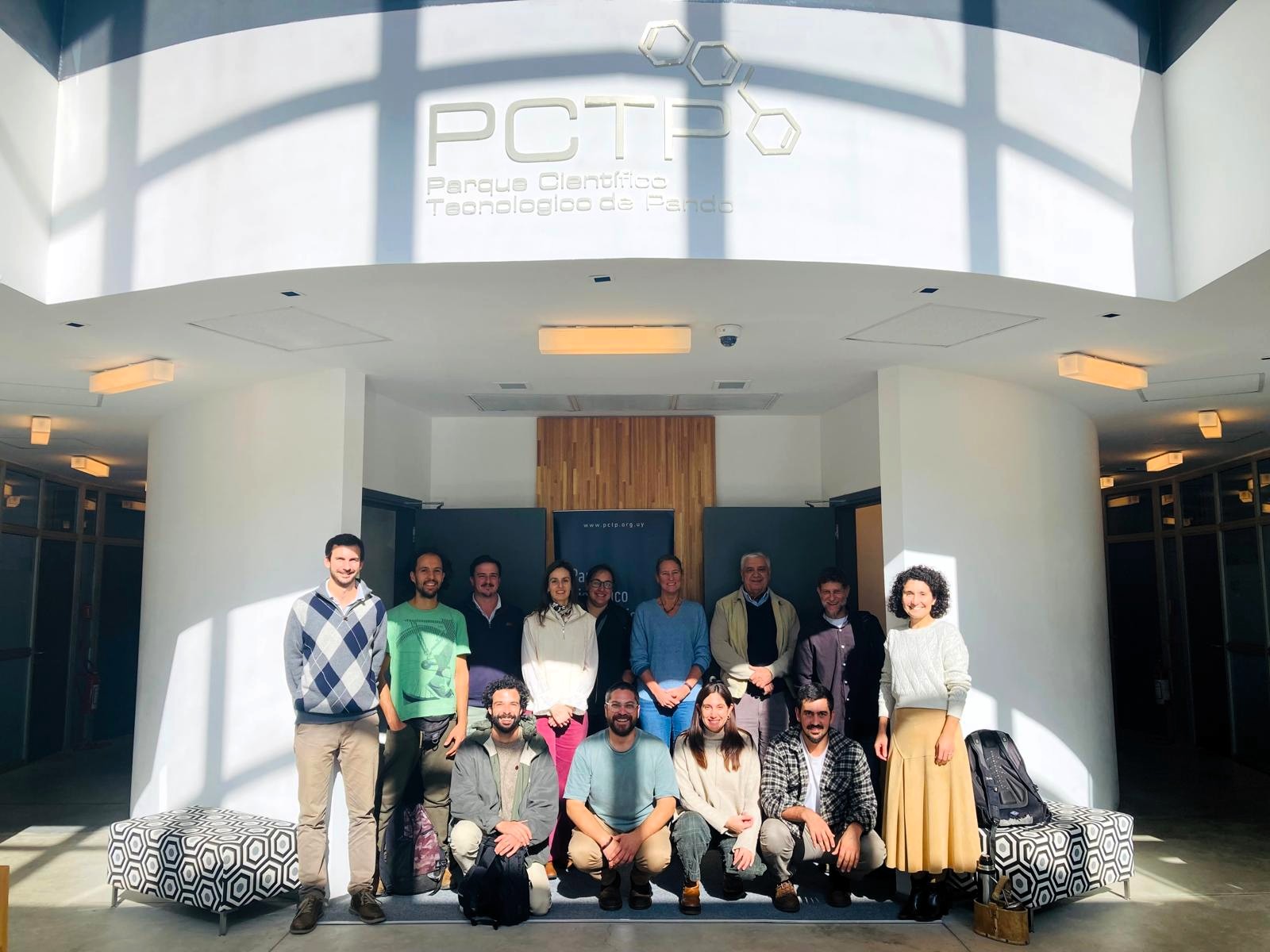
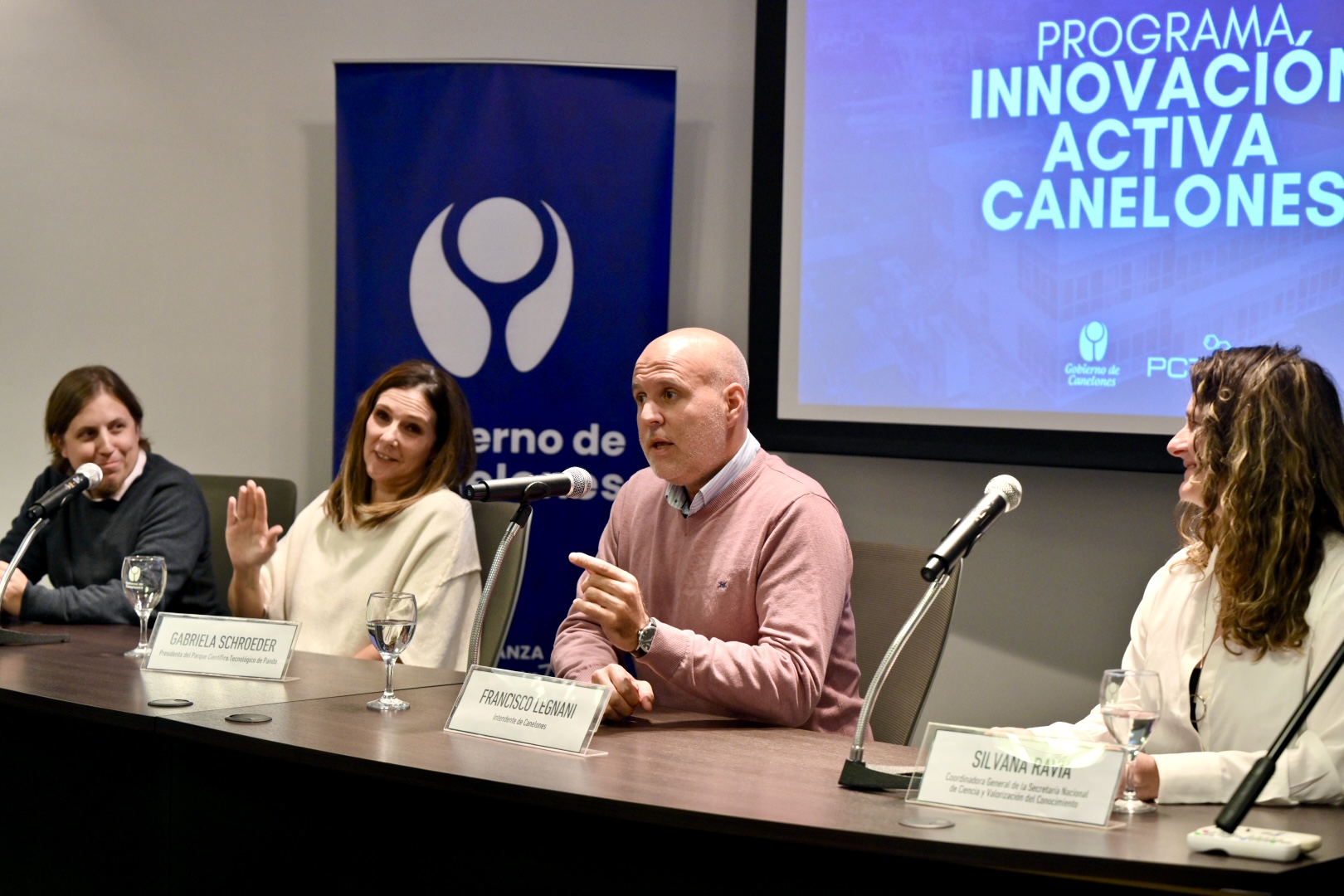
Canelones y el Parque Científico lanzaron el Programa de Innovación Activa para fortalecer el desarrollo empresarial del departamento
El Gobierno de Canelones y el Parque Científico y Tecnológico de Pando realizaron el lanzamiento del Programa de Innovación Activa, una iniciativa orientada a acercar servicios científicos, tecnológicos y de innovación a pequeñas y medianas empresas del departamento. La propuesta busca facilitar el acceso de las empresas canarias a capacidades especializadas disponibles en el PCTP, promoviendo procesos de mejora, transferencia tecnológica y desarrollo productivo basado en conocimiento.
El programa contará con una inversión inicial de $ 2.000.000 durante el primer año y estará dirigido a empresas con potencial innovador u oportunidades de mejora tecnológica. El fondo permitirá financiar parcialmente servicios técnicos y científicos brindados por el Parque, mientras que las empresas seleccionadas también deberán aportar una contraparte.
La iniciativa se estructura en tres etapas. En primer lugar, se realizará un diagnóstico de empresas con potencial innovador o con necesidades de mejora tecnológica. Luego, se avanzará en la prestación de servicios específicos vinculados a vigilancia tecnológica, transferencia de conocimiento y acercamiento a la ciencia aplicada. Finalmente, se buscará que las iniciativas con mejores resultados puedan escalar mediante el acceso a instrumentos de mayor alcance.
Durante la actividad, la presidenta del Parque Científico, Gabriela Schroeder, destacó el rol de los parques científicos y tecnológicos como infraestructuras clave para aplicar ciencia, tecnología e innovación al desarrollo productivo con mayor equidad. En ese sentido, valoró el apoyo del Gobierno de Canelones y señaló la importancia de fortalecer la llegada del Parque al territorio.
El lanzamiento contó con la participación del Intendente de Canelones, Francisco Legnani; el secretario general, Pedro Irigoin; la presidenta del Parque, Gabriela Schroeder; el gerente de la institución, John Saegaert; y la coordinadora general de la Secretaría Nacional de Ciencia y Valorización del Conocimiento, Silvana Ravía, entre otras autoridades.
Con este nuevo instrumento, el Parque Científico Tecnológico de Pando y el Gobierno de Canelones refuerzan su articulación para fortalecer el ecosistema de innovación del departamento, acercando capacidades científicas y tecnológicas a empresas locales y contribuyendo a mejorar su competitividad.
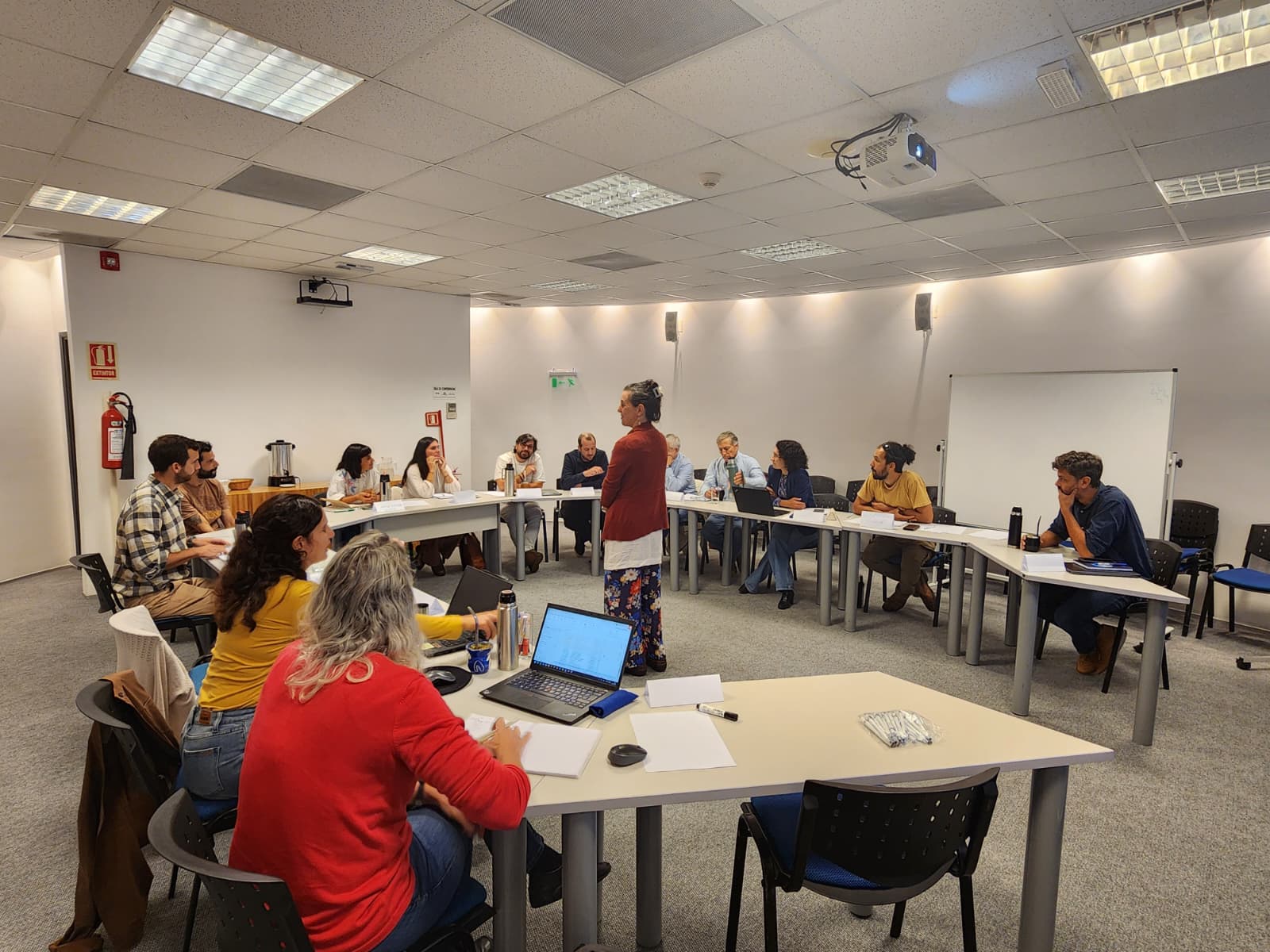
Impulso Bio realizó un taller de comunicación estratégica para fortalecer la proyección del sector de bioinsumos
El martes 21 de abril se llevó adelante en el Parque Científico y Tecnológico de Pando (PCTP) un Taller de Comunicación Estratégica en el marco de Impulso Bio, iniciativa orientada a fortalecer el desarrollo y la articulación del sector de bioinsumos en Uruguay.
La actividad fue facilitada por la especialista en comunicación Rocío Ramírez Paulino y estuvo dirigida al grupo de empresas que participa del proyecto. Durante la instancia se trabajaron aspectos vinculados a la comunicación sectorial, la construcción de identidad, la definición de mensajes, el storytelling, las estrategias de posicionamiento y el desarrollo de contenidos.
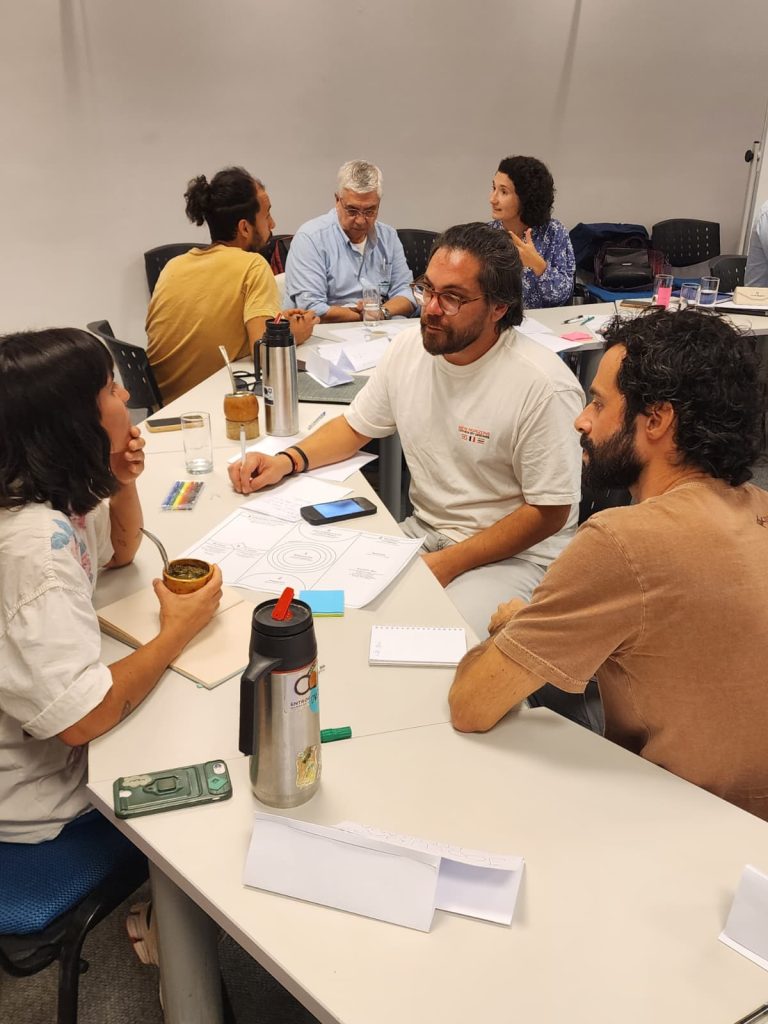
El taller permitió avanzar en una mirada compartida sobre los desafíos comunicacionales del sector, promoviendo el intercambio entre las empresas participantes y la identificación de elementos comunes para comunicar el valor de los bioinsumos en el contexto productivo nacional.
En ese sentido, la instancia se integró al proceso de trabajo colectivo que viene impulsando el proyecto, orientado a fortalecer las capacidades asociativas, mejorar la articulación entre empresas y contribuir a la consolidación de una agenda común para el sector.
Impulso Bio es una iniciativa llevada adelante conjuntamente por el Parque Científico y Tecnológico de Pando (PCTP) and the Diálogo Agropecuario Uruguayo-Alemán (DAUA), en articulación con un grupo de empresas del sector de bioinsumos. El proyecto cuenta con el apoyo de la Agencia Nacional de Desarrollo (ANDE), a través del instrumento Prácticas Asociativas.
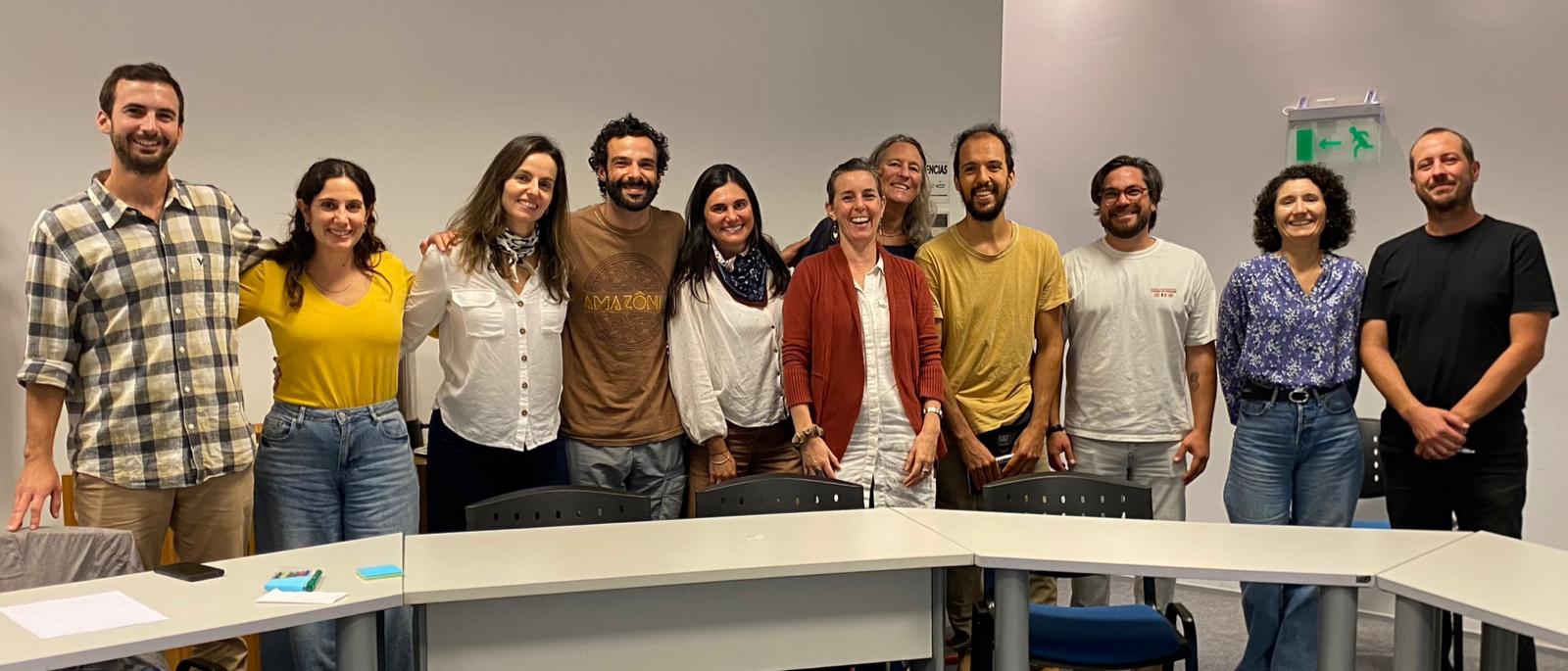
Desde el PCTP y el DAUA se continúa acompañando este proceso de trabajo, que busca fortalecer la proyección del sector de bioinsumos en Uruguay, promoviendo la cooperación, la generación de capacidades y el desarrollo de herramientas comunes para su posicionamiento.
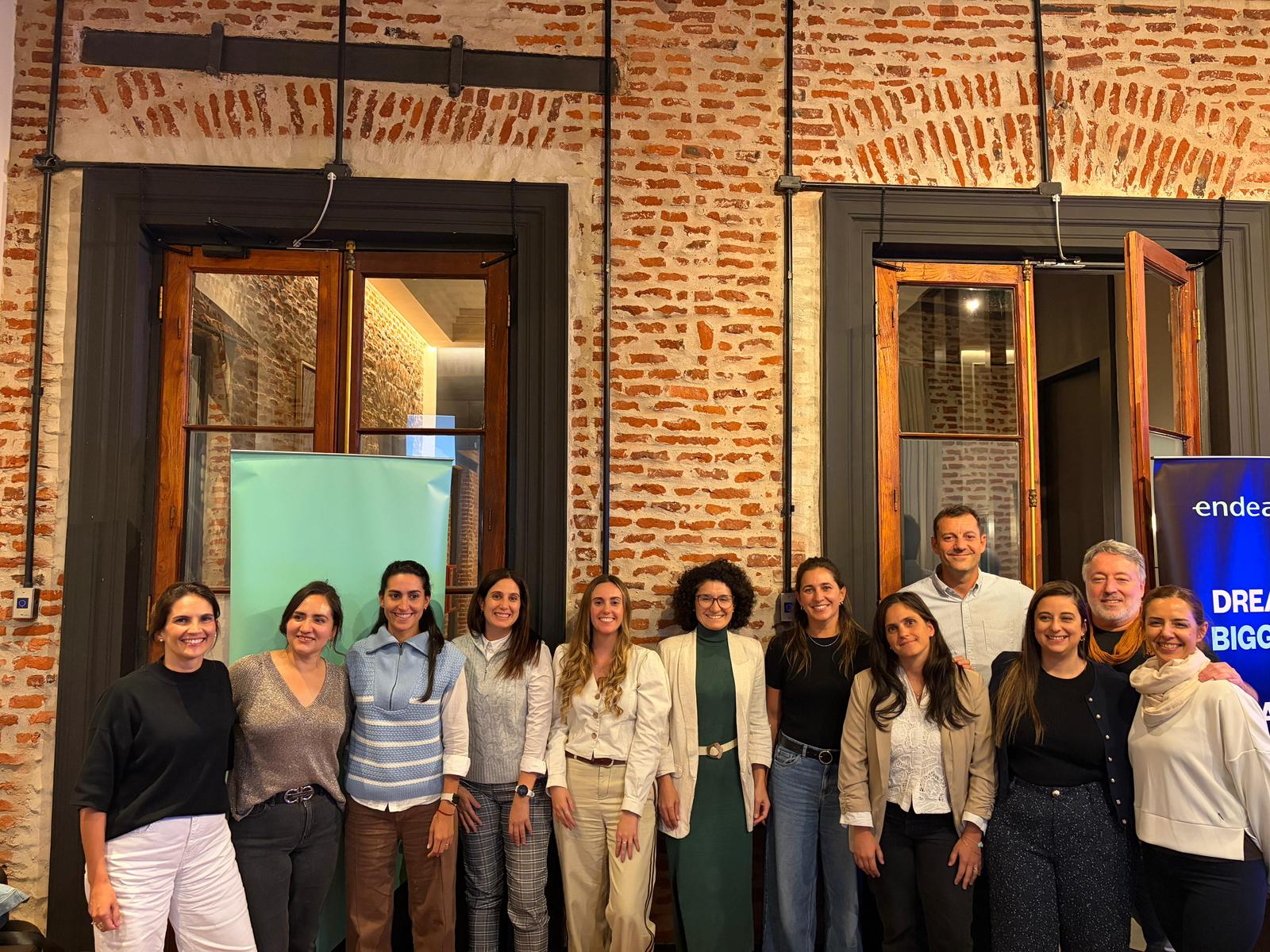
El Parque Científico participó de una nueva etapa del programa Scale Up Biotech de Endeavor
El pasado 30 de abril, en el marco del patrocinio del Parque Científico y Tecnológico de Pando al programa Scale Up Biotech de Endeavor, representantes del Parque participaron del Debate sobre valuaciones en biotecnología con los mentores Arturo Torres y Silvina Carrasco, quienes llegaron desde Argentina para participar del programa.
Por parte del Parque participaron la Laura Vera, gerenta de Desarrollo de Proyectos y Negocios, y Martina Soumastre, ejecutiva de proyectos de innovación.
Durante el encuentro se abordaron aspectos vinculados a la construcción de rutas de financiamiento para startups biotecnológicas, con énfasis en las tendencias actuales del mercado global y regional, el comportamiento de las inversiones en este tipo de empresas y los criterios que hoy consideran los fondos e inversores al momento de evaluar oportunidades.
La conversación también permitió profundizar en los principales desafíos que enfrentan las startups biotecnológicas al prepararse para buscar financiamiento, especialmente en etapas donde resulta clave fortalecer su propuesta de valor, su estrategia de crecimiento, sus capacidades técnicas y su elegibilidad frente a instrumentos de inversión como el venture capital, entre otros.
Otro de los temas abordados fue la valuación de empresas biotecnológicas, un aspecto central para comprender cómo se construye valor en proyectos intensivos en conocimiento, con ciclos de desarrollo largos, alta complejidad técnica y necesidades específicas de financiamiento.
La participación del Parque Científico en este Scale Up Biotech de Endeavor, se enmarca en su trabajo de articulación con actores del ecosistema de innovación, orientado a fortalecer las capacidades de empresas y emprendimientos de base científico-tecnológica, especialmente en sectores como biotecnología, salud, alimentos, ambiente y áreas vinculadas.

El Parque Científico y tecnoPARQ realizaron un webinar sobre el ecosistema brasileño de innovación y las oportunidades de cooperación regional
La actividad reunió a referentes de Brasil y Uruguay para compartir información estratégica sobre políticas públicas, internacionalización, startups, parques tecnológicos y mecanismos de cooperación entre ambos países.
El Parque Científico y Tecnológico de Pando y el tecnoPARQ, Parque Tecnológico de la Universidade Federal de Viçosa, realizaron el webinar “Panorama del Ecosistema de Innovación Brasileño y las Perspectivas de la Cooperación Internacional”, una instancia orientada a acercar oportunidades de colaboración entre empresas, startups, equipos de investigación e instituciones vinculadas a la ciencia, la tecnología y la innovación en América Latina.
La actividad formó parte del proceso de cooperación entre ambas instituciones, que integran la Asociación Internacional de Parques Científicos y Áreas de Innovación (IASP) y vienen trabajando en una agenda común para fortalecer la conexión entre los ecosistemas de innovación de Uruguay y Brasil.
Durante el encuentro, representantes institucionales de Brasil presentaron una mirada amplia sobre el desarrollo reciente del ecosistema brasileño, sus principales capacidades, instrumentos de apoyo y estrategias de internacionalización. Participaron como expositores Vinicius Bastos da Cruz, oficial de Cancillería del Ministerio de Relaciones Exteriores de Brasil, División de Ciencia, Tecnología e Innovación; Lucas Mendes, subsecretario de Ciencia, Tecnología e Innovación de la Secretaría de Estado para el Desarrollo Económico de Minas Gerais; y Angélica Patarroyo, agente de internacionalización de tecnoPARQ.
Uno de los ejes de la presentación estuvo centrado en la escala y diversidad del ecosistema brasileño. Se destacó que Brasil cuenta con una trayectoria sostenida de fortalecimiento de sus capacidades científicas, tecnológicas y empresariales, con una red integrada por incubadoras, parques tecnológicos, aceleradoras, universidades, centros de investigación, empresas y organismos públicos. También se subrayó el peso de sectores como agroinnovación, salud, fintech, educación digital, biotecnología, inteligencia artificial, energía y tecnologías aplicadas al desarrollo productivo.
La exposición abordó, además, el papel de la diplomacia de la innovación impulsada por Itamaraty (Ministerio de Relaciones Exteriores de Brasil), orientada a posicionar a Brasil como un país productor de conocimiento, tecnología e innovación, así como a facilitar la conexión entre actores brasileños y extranjeros. En ese marco, se presentaron herramientas como mapeos de ecosistemas, estudios de mercado, misiones tecnológicas, programas de incubación cruzada, participación en ferias internacionales y mecanismos de vinculación entre startups, centros de investigación, empresas e instituciones públicas.
Desde la Secretaría de Estado para el Desarrollo Económico de Minas Gerais se compartieron distintos instrumentos de política pública orientados a impulsar la innovación, la competitividad empresarial, la descentralización territorial y la conexión entre soluciones tecnológicas y desafíos públicos. Entre los programas mencionados se incluyeron iniciativas de subvención económica, aceleración de startups, innovación abierta para la administración pública, líneas de crédito y convocatorias vinculadas a cambio climático, desarrollo productivo y fortalecimiento regional.
Por su parte, tecnoPARQ presentó el rol de los parques tecnológicos como plataformas de articulación entre conocimiento, mercado y gobierno. En particular, se destacó su trabajo en procesos de incubación, residencia empresarial, internacionalización y soft landing, con foco en facilitar la entrada de empresas extranjeras al mercado brasileño y, al mismo tiempo, apoyar a empresas brasileñas interesadas en explorar otros mercados.
El webinar también permitió intercambiar preguntas y experiencias concretas sobre los desafíos que enfrentan las empresas uruguayas al momento de ingresar al mercado brasileño, especialmente en relación con la identificación de interlocutores, el acceso a programas públicos, la articulación con consulados y embajadas, y la comprensión de las particularidades culturales, regulatorias e institucionales de cada territorio.
Para el Science Park, esta instancia se inscribe en una línea de trabajo orientada a generar información estratégica, ampliar redes de cooperación y acercar oportunidades concretas de internacionalización a las empresas y proyectos nacionales. La alianza con tecnoPARQ permite avanzar en una agenda regional que reconoce la complementariedad entre los ecosistemas de Uruguay y Brasil, y que busca facilitar nuevas conexiones para el desarrollo de proyectos de innovación, transferencia tecnológica y expansión empresarial.
El encuentro da continuidad a una primera actividad realizada a fines de 2025, centrada en la presentación del ecosistema uruguayo de ciencia, tecnología e innovación, y consolida una agenda bilateral que busca profundizar el conocimiento mutuo entre instituciones, empresas, startups y equipos de investigación de ambos países.
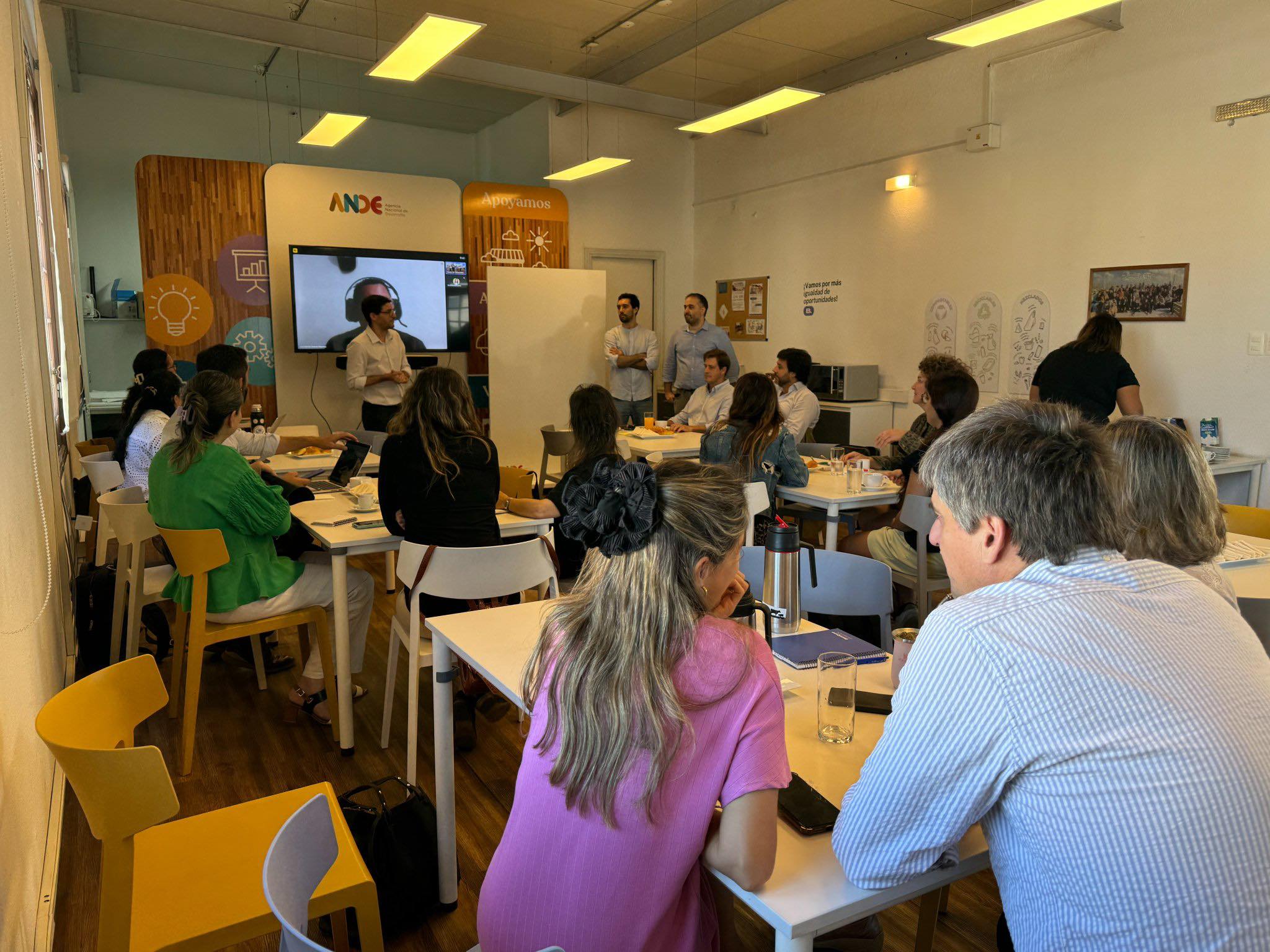
El Parque Científico participó en el prelanzamiento del Programa de Formación en Asociatividad Empresarial de ANDE
Martina Soumastre, ejecutiva del Parque Científico y Tecnológico de Pando, asistió a la instancia previa al inicio de este programa orientado a fortalecer capacidades técnicas para la promoción y gestión de procesos asociativos entre empresas.
El pasado 26 de marzo, Martina Soumastre, ejecutiva del equipo de Gestión de la Innovación del Parque Científico y Tecnológico de Pando (PCTP), participó del prelanzamiento del Programa de Formación en Asociatividad Empresarial de la Agencia Nacional de Desarrollo (ANDE).
El programa está dirigido a personal técnico vinculado a instituciones y organizaciones de todo el país representativas de empresas, con interés en incorporar conocimientos y capacidades en la temática de asociatividad empresarial. Su objetivo es capacitar a personas representantes o vinculadas a estas instituciones para la gestión y facilitación de procesos de asociatividad en grupos de empresas con intereses comunes.
La propuesta prevé dos etapas. La primera consiste en una capacitación de aproximadamente 20 horas, en modalidad predominantemente virtual, distribuida en ocho encuentros semanales entre marzo y mayo de 2026. La segunda se desarrollará entre abril y julio, e incluye un asesoramiento técnico para la identificación y conformación de acciones asociativas con grupos de empresas de la institución u organización que cada participante representa.
La iniciativa busca aportar herramientas metodológicas para la identificación, promoción y gestión del trabajo asociativo entre empresas, incorporar buenas prácticas para la facilitación de grupos con intereses comunes y estimular la generación de proyectos que puedan canalizarse a través de los instrumentos de asociatividad empresarial de la agencia.
La participación del PCTP en esta instancia se vincula con su interés en seguir fortaleciendo capacidades para el acompañamiento de procesos colaborativos entre empresas, en línea con su trabajo de articulación con actores del ecosistema de innovación y desarrollo productivo.
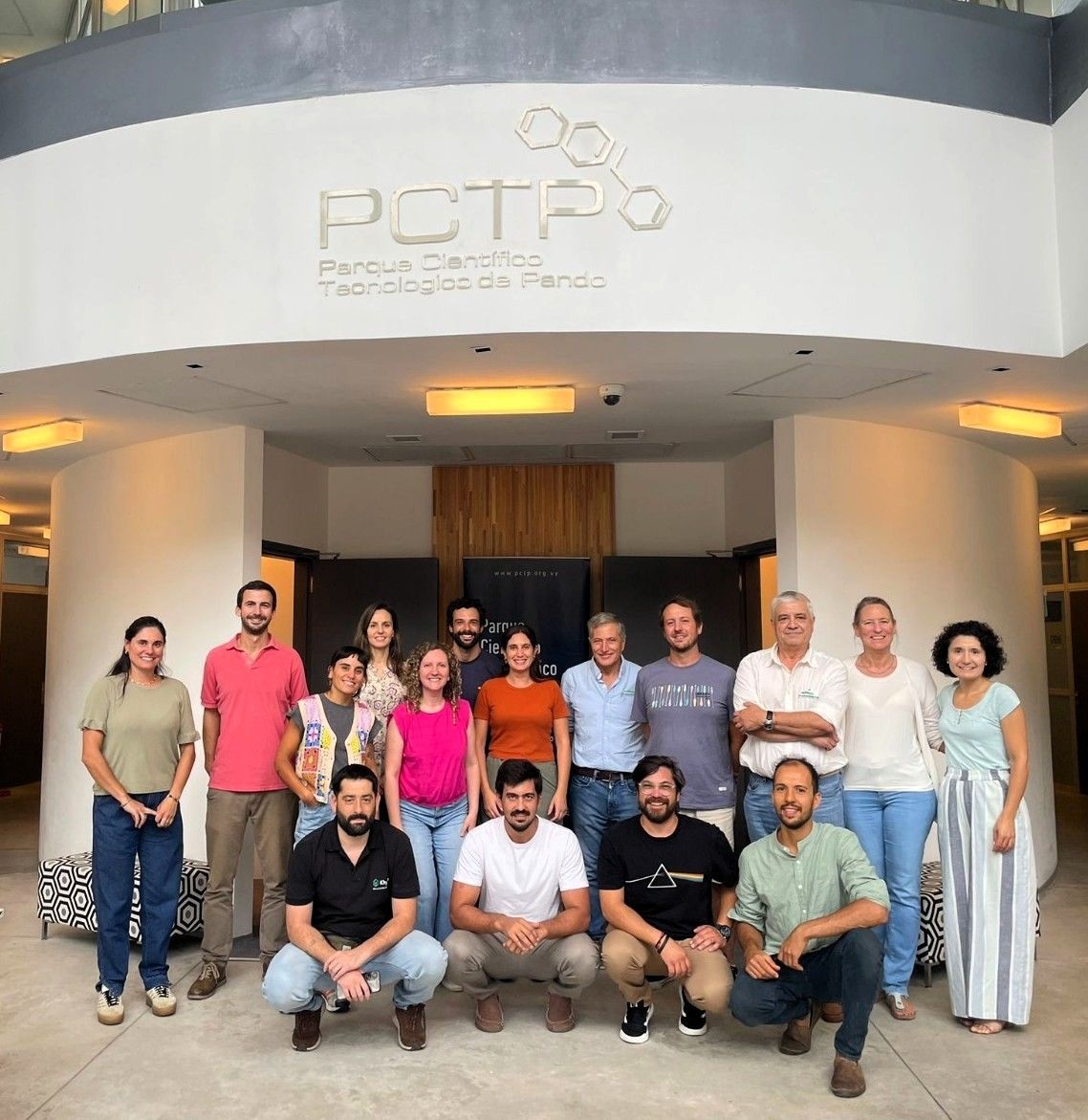
Impulso Bio: comenzó un proyecto para fortalecer el sector de bioinsumos en Uruguay
El pasado 6 de marzo se realizó el taller de lanzamiento de Impulso Bio, una iniciativa orientada a fortalecer el sector de bioinsumos en Uruguay a través del trabajo conjunto entre empresas e instituciones vinculadas al ecosistema agropecuario.
El proyecto es impulsado por el Diálogo Agropecuario Uruguayo-Alemán (DAUA) and the Parque Científico y Tecnológico de Pando (PCTP), en articulación con diez empresas nacionales productoras de bioinsumos, y cuenta con el apoyo de la Agencia Nacional de Desarrollo (ANDE) mediante el instrumento Prácticas Asociativas.
Durante la jornada se presentaron los principales lineamientos de trabajo, el cronograma previsto y las primeras acciones de articulación entre las empresas participantes. En las próximas etapas se desarrollarán instancias de capacitación, talleres con instituciones y espacios de intercambio con productores y especialistas.
A través de este proyecto, se busca contribuir a la consolidación de un sector más articulado, con mayor visibilidad y mejores condiciones para proyectarse a nivel nacional e internacional, en línea con los desafíos de una producción agropecuaria más sostenible.
Desde el PCTP acompañaremos este proceso y compartiremos los avances que surjan del trabajo colaborativo entre las empresas y las organizaciones participantes.

El Parque Científico presenta a sus nuevas autoridades
El pasado 28 de enero de 2026, la Junta Directiva Honoraria del Pando Science and Technology Park eligió a la ingeniera acuícola Gabriela Schroeder como nueva presidenta de su Directorio.
Esta elección se dio según lo dispuesto en el artículo 575 de la Ley de Presupuesto Nacional 2025-2029 (Ley 20.446), que modifica la forma de gobernanza del Parque. La nueva normativa dispone que la presidencia del Parque Científico sea electa anualmente entre los integrantes de la Junta Directiva Honoraria.
Schroeder, quien integra la Junta Directiva en representación del Ministerio de Industria, Energía y Minería (MIEM) y es además la jefa de Políticas de Innovación de la cartera, posee una gran experiencia en la generación de redes de trabajo academia-institucionalidad-privados materializada en la implementación y ejecución de un amplio abanico de proyectos de I&D+i y conformación de consorcios tecnológicos internacionales.
Durante la sesión, los integrantes del Directorio expresaron su agradecimiento al presidente saliente, Dr. Eduardo Manta, por la labor desarrollada al frente de la institución. En su lugar, como Directora representante por la Facultad de Química de la Universidad de la República, el Parque le da la bienvenida a la investigadora Helena Pardo. Pardo es doctora en Química y cuenta con una larga trayectoria de trabajo en proyectos de vinculación entre la academia y el sector productivo, principalmente desde su labor en el Instituto Polo Tecnológico de Pando.
Foto: Estefanía Leal (@nia_leal_)

Valorización del conocimiento: 10 años de articulación que hoy se vuelven política de Estado
Nota publicada en la edición Diciembre de Indufarma
Uruguay dio una muy buena señal en 2025 al presentar el Uruguay Innova (U+I), una estrategia país orientada a acelerar el ecosistema de innovación. Este programa nacional, presentado por el gobierno, busca articular al sector productivo y la academia en torno a la ciencia y la tecnología para impulsar el desarrollo. Su premisa es clara: ordenar y potenciar el sistema de investigación e innovación bajo una visión unificada, racionalizando esfuerzos dispersos para que conocimiento y productividad confluyan hacia objetivos comunes de crecimiento sostenible. Esta visión estratégica encuentra un aliado natural en el Parque Científico y Tecnológico de Pando, cuya labor de la última década anticipó en muchos sentidos el camino que hoy traza la política pública.
Desde su creación, el Parque Científico opera como un espacio articulador interinstitucional donde confluyen academia, sector productivo y Estado, transformando investigación nacional en valor económico y social. Su Modelo de Aceleración de la Innovación (MAI), una metodología propia de gestión de proyectos de I+D+i, ha sido certificado bajo estándares internacionales por la Asociación Española de Normalización y Certificación (AENOR). Este sello, único en América Latina para un parque científico, garantiza procesos de calidad que maximizan las probabilidades de éxito de cada iniciativa tecnológica. Trabajando con enfoques de innovación abierta y vigilancia tecnológica, el Parque ha logrado agilizar la incorporación de nuevas técnicas en sectores clave como farma, agro y alimentos.
Los resultados concretos no se han hecho esperar. En sus diez años de funcionamiento, el Parque ha colaborado con la incubación de decenas de emprendimientos de base científico-tecnológica y alberga actualmente unas 15 empresas innovadoras enfocadas en sus áreas de interés. Gracias a este ecosistema, han surgido nuevos productos y tecnologías, varios de ellos protegidos mediante patentes nacionales e internacionales.
Paralelamente, la dinámica del Parque ha permitido la articulación de iniciativas privadas con recursos humanos altamente calificados. Investigadores, técnicos y referentes de instituciones como la Universidad de la República, la UTEC, el IIBCE y el INIA, entre otros, se integran en proyectos y firman acuerdos a través de la gestión y acompañamiento del Parque Científico. A estas instituciones se suma también la Universidad Católica del Uruguay con quien el Parque Científico ha firmado en el primer trimestre de 2025 un “Acuerdo Marco de Colaboración”. Estas iniciativas colaborativas derivan en un ciclo donde todas las partes ganan, se generan empleos de calidad, conformando una comunidad de talento que fortalece el tejido innovador del país.
La gran apuesta de los últimos años del Parque Científico ha sido, sin dudas, la articulación sistémica. El Parque funciona mediante alianzas estratégicas con organismos y programas de todo el espectro: colabora estrechamente con institutos de investigación como el Instituto Polo Tecnológico de Pando (Facultad de Química) y el INIA; con la UTEC; con agencias de financiamiento e innovación como ANII y ANDE; con la Dirección Nacional de Industrias (DNI) del MIEM y, por supuesto, con empresas privadas de diferentes escalas. Esta red de cooperación público-privada ha permitido compartir infraestructura, conocimientos, financiamiento y oportunidades, reduciendo brechas entre la academia y el mercado.
Durante años, el Parque ha actuado como puente donde investigadores y empresas convergen en proyectos concretos (pilotos industriales, desarrollo de prototipos, mejora de procesos productivos), que generan soluciones originales a desafíos del sector agroindustrial, farmacéutico y alimentario, entre otros. En esencia, el Modelo de Aceleración de la Innovación, a medida que se consolida, va demostrando que cuando todos los vectores institucionales apuntan en la misma dirección, la innovación deja de ser un esfuerzo aislado para convertirse en un fenómeno colectivo con verdadero impacto país.
Hoy, la estrategia Uruguay Innova amplifica esa filosofía. El programa nacional propone masificar esta sinergia a todo el ecosistema: coordinar agencias, impulsar plataformas en áreas emergentes (como inteligencia artificial, ciencias de la vida o seguridad alimentaria) y revisar los incentivos para la innovación y la educación. El hecho de que el modelo impulsado por el Parque Científico ya venga recorriendo el camino con logros concretos le añade credibilidad y optimismo a esta apuesta.
La alineación entre las políticas públicas y la forma de trabajo del Parque Científico, cuyos resultados positivos comienzan a dar sus frutos, augura un futuro promisorio. Uruguay cuenta con la base para escalar su innovación a nivel nacional, apoyándose en ejemplos exitosos. El Parque, que gracias a su estrecha vinculación con entornos de innovación de países pioneros en estas iniciativas, supo anticiparse a los tiempos, se perfila ahora como socio fundamental en la implementación de la visión país.
El objetivo compartido es claro: convertir el conocimiento en desarrollo a escala país. La década de trabajo silencioso en El Parque Científico y Tecnológico de Pando demostró que es posible; en los próximos años, bajo el paraguas de Uruguay Innova, Uruguay buscará replicar y expandir este modelo de colaboración para que la innovación impulse de forma sostenible la economía y el bienestar de todos los uruguayos.
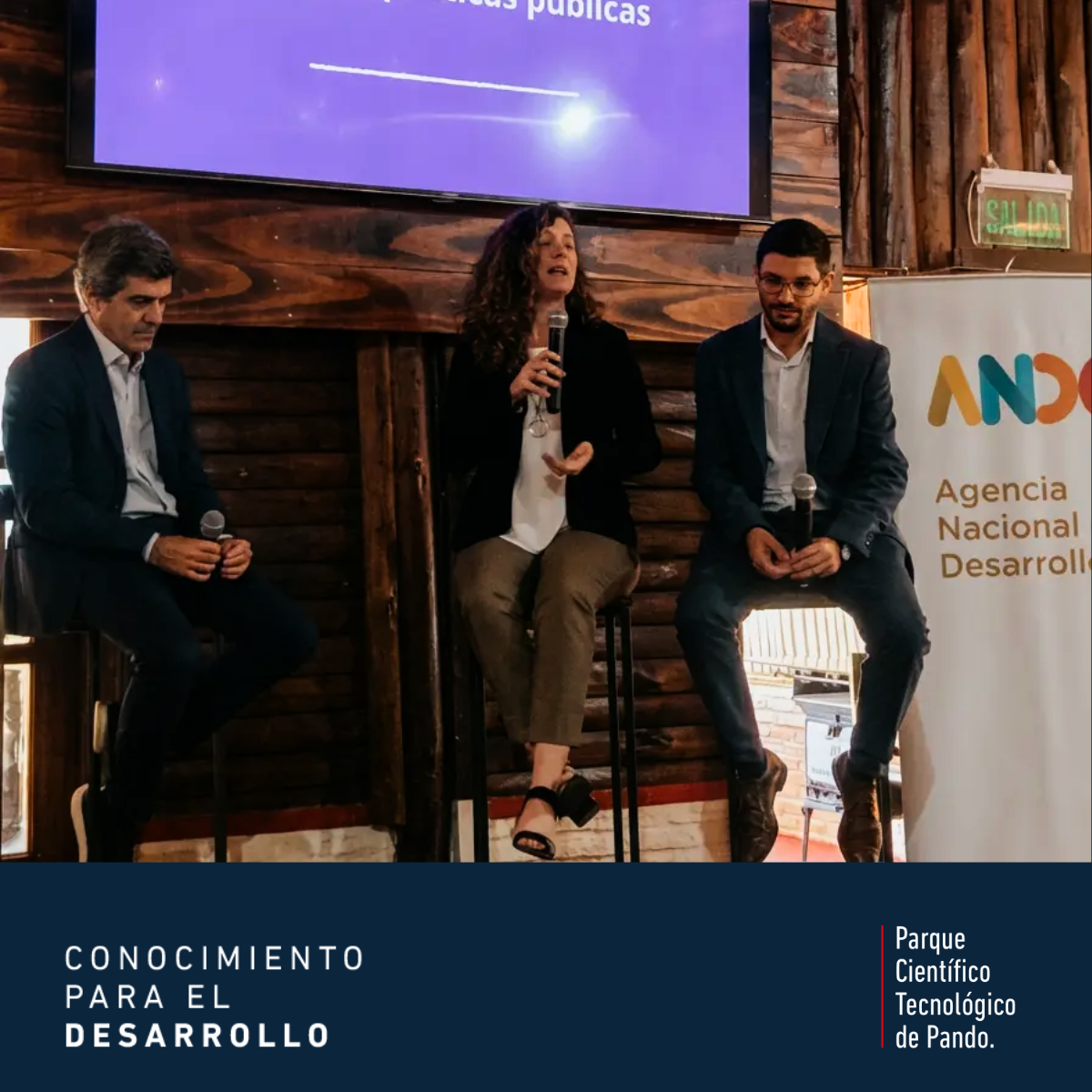
El Parque Científico y Tecnológico de Pando se suma a la red de Instituciones Patrocinadoras de Emprendimientos (IPE)
The Pando Science and Technology Park fue incorporado recientemente al registro de Instituciones Patrocinadoras de Emprendimientos (IPE) de la Agencia Nacional de Desarrollo (ANDE), reforzando su rol dentro del ecosistema emprendedor uruguayo.
Las IPE son organizaciones que acompañan a las personas emprendedoras en la formulación, presentación y ejecución de proyectos a instrumentos de ANDE, como Validación de Ideas de Negocio (VIN) y Semilla, brindando apoyo técnico para definir el alcance de los proyectos, completar los formularios y elegir el instrumento más adecuado.
En este marco, el Parque participó del encuentro de IPEs convocado por ANDE, donde su directora, Silvana Ravía Cuello, fue invitada como expositora para compartir cómo el conocimiento generado en la academia y los laboratorios puede impulsar el desarrollo de emprendimientos innovadores en territorio.
A partir de esta incorporación, el Parque pone a disposición su experiencia en ciencia, tecnología e innovación para acompañar a emprendimientos de base científico-tecnológica que busquen validar sus ideas, escalar proyectos y vincularse con empresas, redes y programas de apoyo en todo el país.
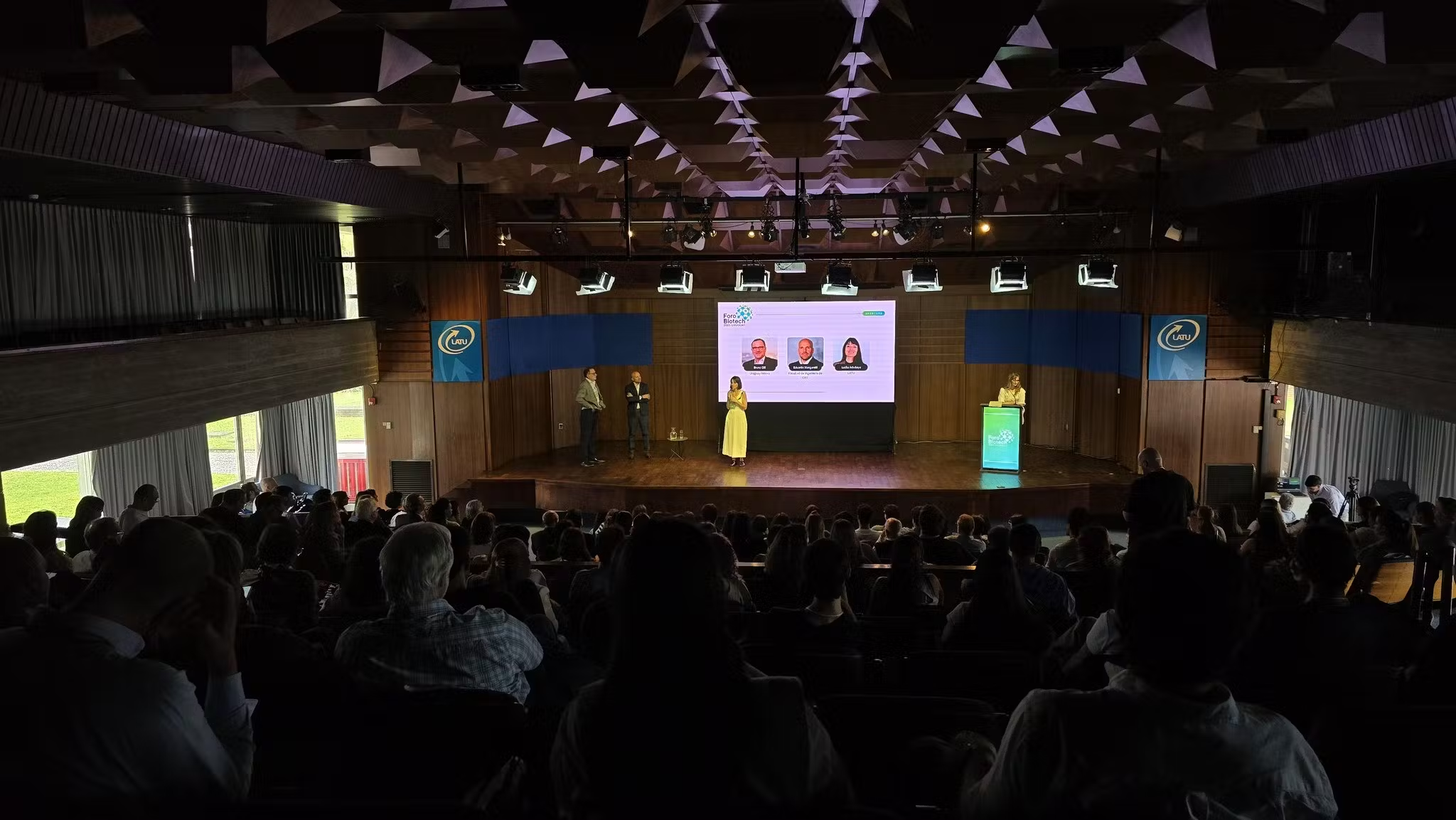
El Parque Científico participó en el Foro Biotech UY 2025
El pasado 22 de octubre, el Parque Científico y Tecnológico de Pando (PCTP) participó del Foro Biotech UY 2025, realizado en el Auditorio del Parque de Innovación del LATU, en Montevideo.
El Foro Biotech se consolida como el espacio de referencia para la biotecnología en Uruguay. Reúne a investigadores, empresas, emprendedores, estudiantes y organismos públicos con el objetivo de difundir ciencia, tecnología e innovación, promover la bioeconomía y fortalecer el ecosistema nacional.
Organizado por el Science Park junto al Centro Biotecnológico de Investigación e Innovación, la Universidad ORT, el Laboratorio Tecnológico del Uruguay (LATU) y la Fundación Latitud (LATU), el evento ofreció conferencias, mesas temáticas, espacios de networking y la participación de destacados referentes del sector.
Durante la jornada, el equipo de "Gestión de la Innovación" del Parque formó parte de las actividades, fortaleciendo los vínculos con instituciones académicas y empresas del ecosistema biotecnológico.
Asimismo, nuestra Gerente de Desarrollo de Proyectos y Negocios, Ec. Laura Vera, integró uno de los paneles del evento, donde compartió la experiencia del Parque en la promoción de la innovación biotecnológica a través de su Modelo de Aceleración de la Innovación (MAI)
En su exposición subrayó que la biotecnología no se limita al laboratorio: se construye también en la conexión entre la Ciencia y la Producción, destacando la importancia de la Gestión que permite que la innovación avance del concepto al mercado.
A través de casos concretos, presentó cómo el Parque Científico acompaña a empresas y grupos de investigación en procesos de technology watch, formulación de proyectos y escalado industrial, consolidando un modelo de vinculación academia–empresa que impulsa la competitividad del país.
“La biotecnología es transversal a toda la matriz productiva uruguaya: cuando la articulamos bien, genera valor en cada sector.”
The Foro Biotech UY 2025 reafirmó el compromiso de las instituciones participantes con el desarrollo de la biotecnología como motor de innovación y crecimiento sostenible para Uruguay y la región.
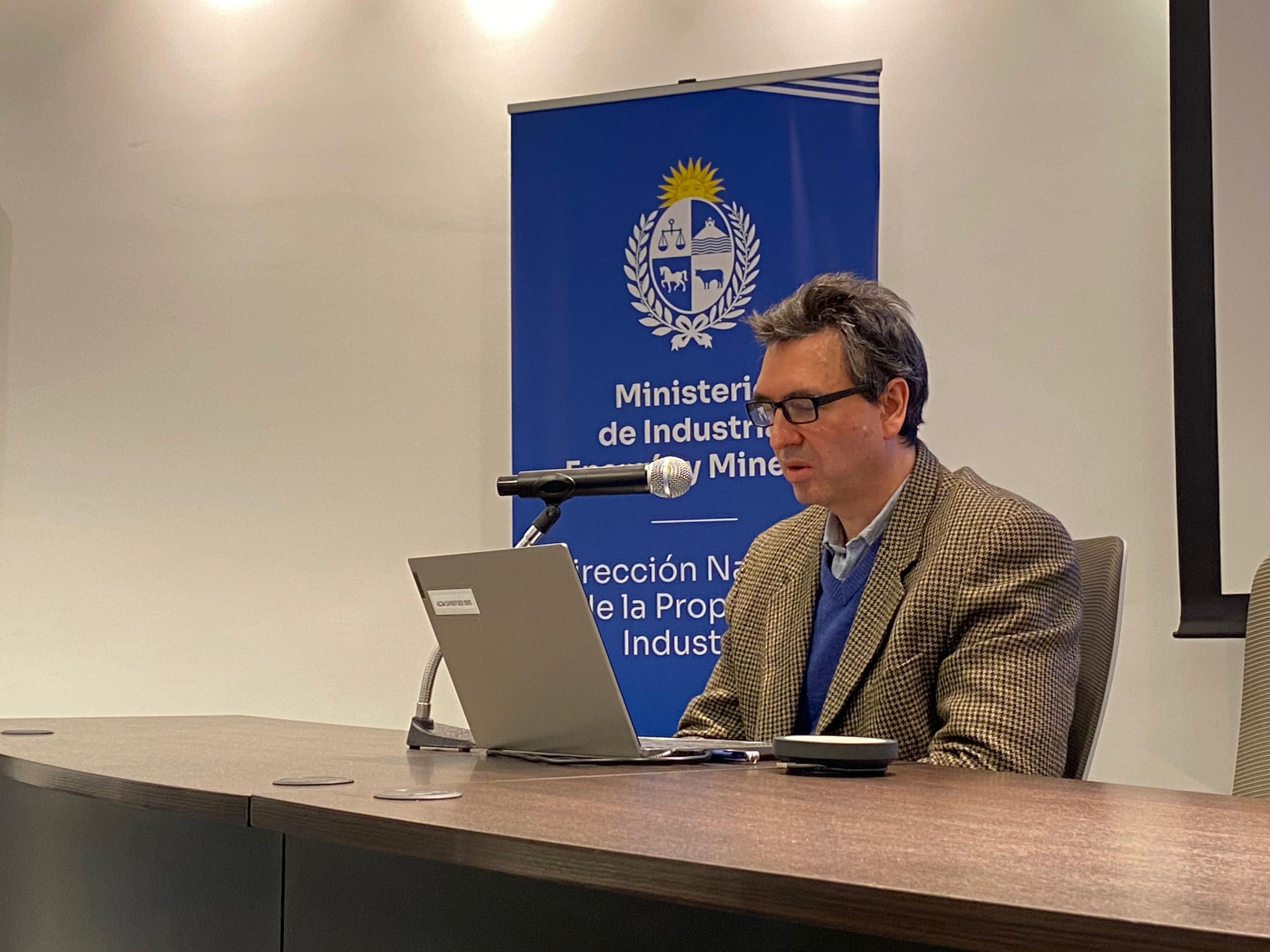
DNPI developed a patent registration workshop at the Pando Science and Technology Park.
Invitado por el equipo de Gestión de la Innovación del Parque Científico, el Ingeniero Gabriel Wallusche en representación de la Dirección Nacional de la Propiedad Industrial, brindó un taller sobre patentes en la Sala de Conferencias del edificio Ceibo. Allí se explicaron diversos conceptos relacionados con la temática, como las definiciones y ejemplos de cada tipo patente, el proceso del trámite dentro de la oficina desde que llega un documento, las distintas tasas y descuentos y las vías de protección nacional, regional e internacional, entre otros.

Ambas instituciones brindarán una nueva instancia de taller, esta vez de asistencia vía zoom y orientada exclusivamente al tema "marcas" que tendrá lugar el próximo miércoles 17 de setiembre de 2025 a las 11.30hs. La actividad es sin costo, y quienes deseen asistir deberán confirmar asistencia al correo info@pctp.org.uy con el asunto "Taller MARCAS DNPI"
En paralelo, la DNPI y el Parque Científico están trabajando para instalar un Centro de Apoyo a la Tecnología y la Innovación (CATI) en el parque. Los CATI son una iniciativa de la Organización Mundial de la Propiedad Intelectual (OMPI) que busca facilitar el acceso a información sobre tecnología y servicios relacionados con la innovación en países en desarrollo.


Wormex presented its progress in the development of its liquid biostimulant at Expo Uruguay Sostenible
Wormexliquid biostimulant project for a more sustainable agriculture, and the Science Parkwere present at the Sustainable Uruguay Expowhich took place between June 4 and 7 at the Antel Arena. Wormex, which is currently in the development phase (pre-prototype), represents another example of the potential of innovation in Uruguay to provide solutions with an impact on the agricultural sector.
From 2023, Wormex has benefited from the advice of the Science Park, through its Innovation Acceleration Model, MAI®The project has grown from the stage when his initiative was just an idea to the pre-prototype of the current biostimulant. Support from the Science Park has included Strategic Surveillance, intellectual property advice, prototyping and R&D project management; itself. The development has been carried out under open innovation; where the role of the Science Park has been key for the articulation and linkage of Wormex with local technological partners, such as the Clemente Estable Institute for Biological Research (IIBCE) and the private laboratory SOSEI.
The first stage of Wormex's development was supported by the National Agency for Research and Innovation (ANII) using the "Tools for Innovation" instrument (HPI_ HPI_ HPI_X_2023_1_179671). This first stage not only allowed the technical validation of the idea of developing the Wormex biostimulant, but also represented the first experience of linkage between the company and the Academy, with highly positive results. Currently, the company is advancing in the next stages of the development, adding to the articulation other key technological actors such as the National Institute of Agricultural Research (INIA)The objective is to evaluate the agronomic efficacy of the biostimulant in greenhouses and in the field, and thus bring the technological solution closer to the market and the agricultural sector in general.
From the Science Park, it is a great encouragement to see how a project that began as an idea that has been accompanied by our innovation management tools, is now exhibited as a tangible reality, in an event of national scope.
Wormex's presence at Expo Uruguay Sostenible was made possible thanks to the European Union's Inspyrame 2.0 Program, implemented by the Uruguayan Chamber of Commerce and Services.

The importance of an innovation district for the country's development
At the international level and with the objective of promoting economic and social development based on science and technology, different associative models have been designed and implemented for decades, particularly in developed countries.
These models include Science Parks, Innovation Zones, Clusters, and Innovation Districts, among others, in particular the Innovation districts are geographic areas that promote collaborative dynamics between public, national and departmental sectors, private actors, research centers, promotion institutions, international organizations and investors.
In Uruguay, for more than a year, the Municipality of Canelones, the Municipality of Montevideo, the Science Park, Zonamerica and the Science and Technology Park of Pando have been working on the design of an Innovation District within the triangle defined by routes 101, 102 and 8.
The creation of the innovation district in the metropolitan area will boost the knowledge economy and strengthen the connection between the productive sector and science, generating economic growth and impact on the development of the territory in which it is inserted.
Successful models and lessons for Uruguay
In recent years, Latin America has also begun to generate these areas of innovation, for example, the ".Route N" in Medellín, Colombia or the District of Porto Digital, in Pernambuco, Brazilhave shown that synergy between the public, private and academic sectors is key to generating environments conducive to innovation. Medellin, for example, transformed its productive matrix thanks to investment in science and technology, promoting technology-based entrepreneurship and attracting global talent.
In Uruguay, the Science Park has more than 10 years of experience in public-private articulation, developing capacities for the country, generating R&D&I projects between the productive sector and academia, working under internationally recognized standards that maximize the probability of success of the projects that are managed, being also a member of the International Association of Science Parks and Areas of Innovation (IASP).
His valuable experience in the regional innovation ecosystem positions him as a key player to lead R&D&I projects between companies and research centers in the future Metropolitan Innovation District.
The impact on the region
The consolidation of this Innovation District in Uruguay will generate multiple benefits. First, it will facilitate the transfer of knowledge from academia to industry, promoting strategic sectors such as biotechnology, nanotechnology and artificial intelligence. In addition, it will foster greater interaction between companies located in free trade zones and the national productive sector, as well as collaboration in research and development projects driven by the demands of international companies. At the same time, it will attract foreign investment and boost skilled employment, providing new opportunities for professionals and entrepreneurs in the region.
Likewise, the development of this ecosystem will promote decentralization, allowing innovation to be concentrated not only in the departmental capital. The metropolitan area has the potential to continue positioning itself as a technological development zone, taking advantage of its growing infrastructure and proximity to the capital. In contrast to other models concentrated in private environments, where benefits are often not effectively linked to the local productive fabric, this district seeks to generate shared value from the outset. Moreover, from the Science Park proposes a collaborative logic in which each ecosystem player develops specialized capabilities. by theme, avoiding unnecessary overlapping and focusing on generating real synergies. The challenge, then, is to promote a policy at the country level that can be aligned with this collaborative vision, recognizing that the effectiveness of the ecosystem lies precisely in its intelligent articulation and shared purpose.
A key step in this direction was taken on April 9 with the Co-Creation Workshop: "Vision of the Near Future for the Metropolitan Innovation District". This instance marked a milestone in the collective construction of the project, where key actors of the Uruguayan Innovation system participated, in what could be considered the cornerstone of the future district.
Challenges and next steps
To ensure the success of the Metropolitan Innovation DistrictIn order to achieve this, it is essential to have a clear development strategy and a sound governance model that promotes collaboration among all stakeholders. This implies investing in technological infrastructure and mobility solutionsEstablish incentives for the establishment of companies and the financing of R&D&I projects, as well as design specialized training programs that respond to the needs of the ecosystem. In the same way, it is essential to implement facilitation mechanisms at both the national and departmental levels, so that each initiative finds the institutional support it needs to grow.. These elements, worked on in a coordinated waywill be decisive for the to consolidate an innovative, dynamic and sustainable environment.
The future Metropolitan Innovation District represents a great opportunity for the region. With proper planning and the accumulated knowledge of institutions such as the Science Park, the business sector and local governments, it is possible to build a sustainable model that will drive long-term economic and social development.

Innovating with global quality: reaching a new milestone
The Pando Science and Technology Park proudly announces that it has been awarded the ISO 56001 certification in innovation management systems, awarded by AENOR the past April 22nd. With this achievement, the Science Park has become the America's first science park in meeting the highest international standards for innovation management.
The ISO 56001 is the first certifiable international standard for innovation management. It establishes the requirements and guidelines for create, implement, maintain and improve an innovation management system, with the objective of enhancing the capacity of organizations to generate innovative solutions in a sustained manner. Its scope covers organizations of any size and sectoroffering a systematic approach based on global best practices to foster and manage innovation.
The certification process was accompanied by AENOR , Spanish Association for Standardization and Certificationwhich validated the compliance of the Science Park's management system with the requirements of ISO 56001. This recognition brings credibility and recognition customers, partners and investors, while at the same time reinforcing the confidence of all stakeholders in our ability to manage R&D&I projects with criteria of excellence.
This milestone adds to a long road in the professionalization of research and innovation. At April 2019 with the support of the Andean Development Cooperation (CAF).the Park was the world's only science park certified under the standards UNE 166002 (R&D&I management) and UNE 166006 (surveillance and intelligence), laying the foundations for an innovation ecosystem with European standards.
The expansion of our certifications strengthens not only the competitive position of the Science Park, but of the country as a whole, by promoting a more efficient and effective more efficient and sustainable management of R&D&I projects. In addition, the innovation certification allows the systematization of activities and the reduction of uncertainty in processes, contributing to a more dynamic environment conducive to scientific and technological development.
Working under international standards promotes the effectiveness, efficiency and strategic scope of each initiative, generating greater value for companies, researchers and institutions linked to R&D&I and enhancing the capacity of organizations to generate innovative solutions in a sustained manner.
With this new recognition, the Pando Scientific and Technological Park reaffirms its mission of to promote an innovative UruguayWe offer our community a robust framework for transforming ideas into impactful solutions.

From the lab to the table
The company LOTO developed a pre-prototype of kefir ice cream with the support of the Science Park, betting on functional foods with an impact on health and industry.
The Pando Science and Technology Park accompanied, together with the Technological University (UTEC), the closing of the first stage of a new development in functional foods from LOTOa Uruguayan company dedicated to the production and marketing of milk kefir-based products. The project, co-financed by the National Agency for Research and Innovation (ANII) through the so-called Tools for Innovation 2023The company sought to develop the first proof of concept of a kefir ice cream oriented to people with specific nutritional requirements and also to a wider public interested in healthy options.
Kefir, known for its probiotic properties and its benefits for the immune, digestive and metabolic systems, represents an opportunity for innovation in the domestic food industry. With this initiative, LOTO not only positions itself as a pioneer in the development of this type of product in the region, but also strengthens its technical and strategic capabilities to move towards new stages of development and internationalization. The pre-prototype ice cream -which extends the shelf life of the original product and allows better logistics management- is a commitment to diversify the supply of functional foods in the national and regional market, with a scientific basis.
The Science Park supported the initiative by providing strategic services that included technological and commercial surveillance studies, project design and management, coordination with UTEC and support in applying for financing instruments. This integral work method, focused on open innovation and the connection between diverse actors, allows transforming ideas into viable products, articulating knowledge, management capacity, infrastructure and business vision.
The experience reaffirms the role of the Science Park as a key partner in the development of life sciences projects, particularly in initiatives that require integrating technical, regulatory and commercial dimensions from early stages. Cases such as LOTO demonstrate that it is possible to advance in complex projects through agile methodologies, specialized support and effective links with the national and international scientific-technological system.
This type of experience not only strengthens the innovation capacity of small, medium and large companies, but also contributes to the positioning of the country as a generator of differential solutions based on knowledge. The Science Park continues to promote projects that connect science and production, with an impact on the competitiveness of industries and, in the case of LOTO, directly on the welfare of society.

From some success stories to an Innovative Uruguay
Note developed for the supplement CANELONES PRODUCTIVO, Caras & Caretas, 2025
Uruguay has cemented its development in key sectors such as livestock, agribusiness, logistics and trade, where innovation has a fundamental role to play. Examples such as biotechnological developments applied in the agricultural sector, the development of renewable energies and the optimization of processes in the meat industry show how Canelones has been a protagonist in this process in the Life Sciences.
Despite the existence of various initiatives that promote innovation in the country, many have emerged as a function of interest groups, specific access to economic resources or particular leaderships. However, the lack of a strong and deep articulation among them has prevented the consolidation of a cohesive ecosystem with a common national strategy.
To achieve a real and sustained impact, it is essential that the system fosters synergy among the country's different actors. This must start from an integrated national development strategy, as without a structured and collaborative approach, progress will remain fragmented and limited in scope. Some success stories will not change Uruguay's GDP.
As the well-known phrase goes, if we want to obtain different results, we cannot keep doing the same thing. However, changing a country's innovation culture is still a challenge. In Uruguay, we continue to reflect and talk about innovation, but the real impact will come when we manage to turn those ideas into action.
Innovation cannot emerge as an individual effort, but as a collective process. It is the country as a whole that innovates or else we will continue to see isolated and exceptional cases. Innovation in Life Sciences is an interconnected ecosystem where knowledge generators, companies, incentives, intellectual property, regulatory frameworks, foreign trade, capital markets and investment policies, to mention a few, must be strategically aligned. It is a great chain, where the vectors must point in the same direction, to join forces and move forward with focus towards the objective.
In this context, the Science Park plays a key role in connecting science with the productive sector. Its work has made it possible to transform knowledge into economic and social development, promoting collaboration between academia and business.
Strategically located in the heart of Canelones, a key department in the productive development of the country, the park not only offers specialized infrastructure, but also promotes Research and Development projects with an open innovation approach for companies and projects throughout the region. Technology-based companies related to chemistry and life sciences find in the Park a strategic ally for the development of products and processes, accessing a vast network of researchers, methodological tools and support in the management and valorization of projects.
The Science Park, applying internationally recognized methodologies, promotes the connection between science and production, consolidating itself as a strategic partner for the deployment of a national innovation strategy.

Presentation of the new MIEM team at the Science Park
Last Thursday, January 22, the Science and Technology Park of Pando was visited by President-elect Yamandú Orsi, together with the Secretary of the Presidency, Alejandro Sánchez, and the Deputy Secretary, Jorge Díaz, who, together with the future Minister of Industry, Energy and Mining, Fernanda Cardona, presented the team that will accompany her in her administration as of March 1.

Orsi, who during his term as Mayor of Canelones, was for a time the director of the Science Park, supported the future Minister Cardona, who emphasized "...the importance of the Science Park for the development of the region.the importance of these spaces as an example of collaboration between research, development and innovation, supported by academia, the business sector and the State.".
From the Science Park, we celebrate this meeting as a new opportunity to consolidate strategic alliances between the government, the academic sector and the productive sector, in pursuit of a more competitive, innovative and sustainable Uruguay.


The reality of projects in Life Sciences. The path from an idea to its realization
Note developed for the December 2024 issue of Indufarma magazine.
In the Life Sciences area, research, development and innovation (R&D&I) projects represent one of the greatest promises for growth and progress. However, this potential goes hand in hand with a series of intrinsic challenges, ranging from the definition of clear objectives to the successful implementation of ideas, including the management of time, resources and risks. This complex but fascinating scenario requires comprehensive strategies to turn initial concepts into concrete results.
The Pando Science and Technology Park has established itself as a key player in this process, offering specialized support that accompanies companies in all stages of their R&D&I projects. With a practical and personalized approach, the Park works in the encounter between science and the productive sector, connecting researchers, technical resources and expertise with the specific needs of the productive sector and society as a whole. This model has allowed complex projects to move forward, overcoming barriers that often hinder innovation.
Life Science projects not only require advanced technical expertise, but also a strategic planning capacity that integrates decision making, taking into account complex information not only from the technical, but also commercial, legal and regulatory, competitive, etc., and the management of risks associated with this type of initiative. Defining achievable objectives, aligning the interests of technological and business partners, articulating the roles of the participants, developing schedules adjusted to technical and market times and ensuring the efficient allocation of resources are critical aspects that make the difference between a successful project and one that falls by the wayside. In this context, the Science Park stands out for its management capacity and experience in articulating diverse interests and leveling expectations among the parties involved, promoting a collaborative environment that is fundamental for success.
A clear example of this synergy is the work carried out with SEGENA CORPORATION S.A., a Uruguayan technology-based company dedicated to the development of innovative immunostimulant molecules, with potential application as active ingredients in drugs for human and animal health applications. With the support of the Science Park, SEGENA has successfully executed co-development projects with academia, particularly with the University of the Republic. In addition, it has used the services of the Park's Technical and Financial Management of Projects, as well as Surveillance and Strategic Intelligence.
Another outstanding case is that of Loto, a pioneering company in Uruguay in the production and marketing of milk kefir-based food products. With the support of the Park, Loto not only developed new products, but also strengthened its innovation strategy through access to key services such as strong technological surveillance, design thinking and prototyping. This venture is preparing to continue growing, stepping firmly on its innovation strategy.
Over the years, the Science Park has accumulated valuable experience in the management of projects related to Life Sciences, addressing challenges with an open innovation approach that combines a strong knowledge base of the project environment, high linkage capabilities and monitoring tools with strategic flexibility. This approach allows adapting the methodology to the specific needs of each company and technology partner, seeking results aligned with their objectives. In addition, the Park offers a working model where companies can access a collaboration network that includes the most relevant organizations of the innovation ecosystem in Uruguay.
In an increasingly globalized world, where scientific and technological advances set the pace for economic development, the Science Park is positioned as an indispensable partner for companies wishing to strengthen their competitiveness based on the incorporation of knowledge. Its ability to anticipate trends, identify opportunities and provide customized solutions makes it a key player in the sustainable development of industry in Uruguay.
Projects related to Life Sciences have an enormous potential impact on our lives, being an engine of innovation and development, especially in a country with a productive matrix such as ours. However, in order to carry out their potential, it is essential to have strategic allies that not only understand the technical complexity of these projects, but also manage to put on the table and analyze the different aspects involved and manage the challenges that these projects entail.
The Pando Science and Technology Park will continue to play a crucial role in this challenge, helping to build an ecosystem where science, technology and innovation work hand in hand to create a positive impact on society.